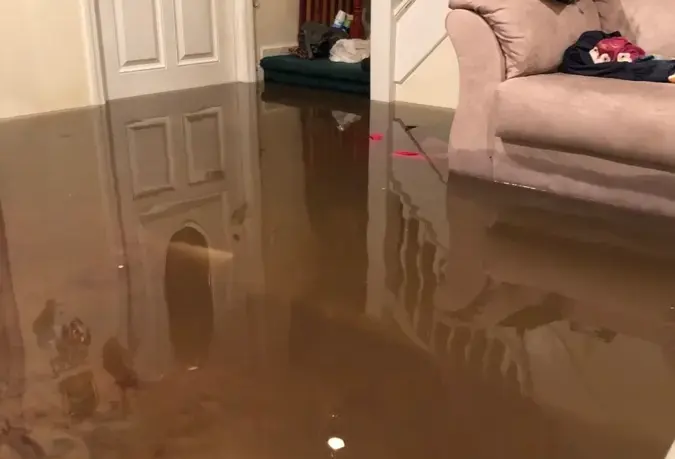
During the nor'easter of September 25 to 27, 2026, East Rockaway was among Nassau County's trouble spots for coastal flooding, and the intersection of East Boulevard and Cooke Street East was submerged. When a storm and a high tide meet, the water that reaches a house is rarely clean rain.
Key takeaways
- Coastal flooding in East Rockaway is tidal as well as rain driven, so floodwater is often salt or brackish.
- Floodwater can be mixed with sewage, which makes it Category 3 and a job for trained crews.
- The September 2026 nor'easter put the village under coastal flood pressure, and East Rockaway reported 1.69 inches of rain by 3:12 p.m. on Saturday, September 26.
- Salt water is hard on wood, plaster and metal, so it is cleaned and dried carefully and not just wiped up.
- Photographs, a list of damaged items and drying readings make a claim easier to document.
What the September 2026 storm showed
A multi day nor'easter struck Long Island from Friday, September 25 through Sunday, and the governor declared a state of emergency. Up to 3 inches of rain was reported across Long Island.
In East Rockaway, East Boulevard at Cooke Street East was submerged. The village also opened municipal parking fields through Sunday so residents in flood prone areas could move their cars to higher ground.
Long Island Rail Road service on the Long Beach Branch was suspended through much of Sunday, September 27 because of flooding near Island Park.
- East Rockaway reported 1.69 inches of rain as of 3:12 p.m. on Saturday, September 26, according to figures attributed to the National Weather Service office in Upton.
- The 3 inches is a Long Island figure and not an East Rockaway total.
- The village sits on the South Shore with canals and bulkheaded waterfront streets.
Storms before this one
Hurricane Sandy on October 29, 2012 sent water down streets in Bay Park and East Rockaway that normally do not flood. FEMA data analyzed by the U.S. Department of Housing and Urban Development showed 1,073 housing units damaged in the village, 1,056 of them from flooding.
On December 23, 2022 a coastal flooding storm flooded canalfront streets, and residents reported losing vehicles to the water.
The housing is old as well. The median home was built in 1949, and 1,599 of 4,095 units predate 1940.
Why tidal flooding is different from rain
Rain flooding comes down. Tidal flooding comes up, from the bay and the canals, and it carries what it picks up along the way.
That means salt, silt, fuel and whatever sits in street drains and storm outfalls.
Salt and brackish water
Salt does not evaporate with the water. It stays in wood, plaster and hardwood floors and keeps drawing moisture, so a salt flood needs more careful cleaning and drying than a rain leak.
Contaminated water
Floodwater from outside is not clean. Water that has crossed streets and yards, or come up from a drain, is handled as Category 3.
Salt water and older homes
Salt water is rough on a house. It can corrode metal fasteners and fixtures, and it leaves residue in wood and plaster that keeps pulling in moisture.
That is why a coastal flood is not finished when the surface looks dry. The cleaning step matters as much as the drying step.
- Hardwood floors are cleaned and checked with a meter before any decision to keep them.
- Plaster and wood framing are cleaned and dried more than once if readings climb back up.
- Electronics, appliances and heating equipment that touched the water should be checked before they are turned on.
When floodwater and sewage mix
The Bay Park Sewage Treatment Plant failed during Hurricane Sandy and released raw sewage into the surrounding estuary, according to New York Sea Grant. The plant is now called the South Shore Water Reclamation Facility, and it sits in the East Rockaway and Bay Park area.
Residents quoted by the Herald said sewer water came up from drains during flooding on canalfront streets. That is why floodwater here should be treated as possibly mixed with sewage.
- Do not wade through floodwater or let children and pets near it.
- Do not run the drains if water is backing up from a floor drain or toilet.
- Throw out food and items that touched the water and cannot be washed and disinfected.
The first day in a flooded house
Safety comes first. Power should be off to any flooded area, and nobody should walk through water that may reach an outlet.
The next step is a quick record of the damage before anything is moved.
- Photograph the high water mark on the walls and the damage to floors and contents.
- Move valuables and papers to a dry second floor or higher shelf.
- Open windows only if it is safe and the weather allows.
- Wear boots, gloves and a mask if you must enter a wet room.
- Call a restoration team to begin extraction and assessment.
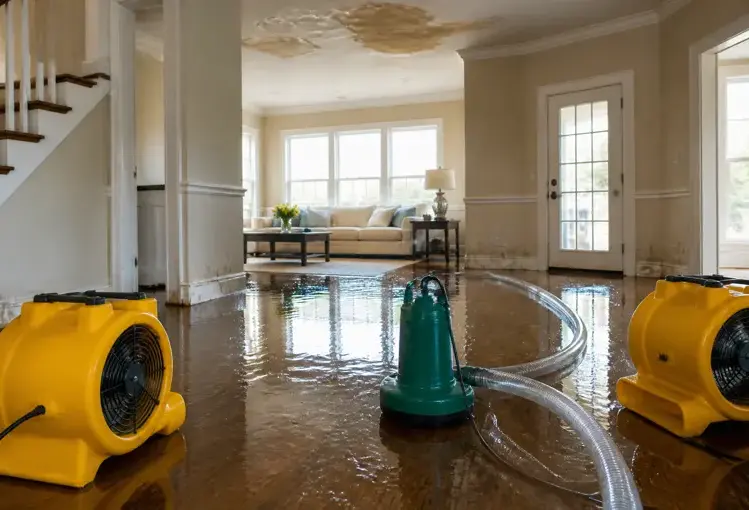
Extraction, removal and drying
Pumps and truck mounted units remove the water first. Soaked carpet, padding and drywall that touched floodwater are removed because they cannot be reliably cleaned.
What stays is cleaned, treated with an antimicrobial and dried until moisture readings reach the dry standard. Salt water needs extra attention on wood and plaster.
The full process is laid out on the page for storm flood cleanup in East Rockaway, and the contaminated water side is covered under sewage backup cleanup in East Rockaway.
Questions to ask a restoration team
After a coastal storm, many neighbors need help at once. A few clear questions help a homeowner compare what is offered.
- How will the team handle salt or brackish water?
- What gets removed, and what is cleaned and dried instead?
- How are readings taken and shared?
- Who coordinates with the plumber, the electrician and the insurer?
Documenting the loss and the next storm
Insurance coverage for flooding depends on the policy and the cause. Photographs, damage lists and drying readings give the homeowner a clear record, and the insurer decides what is covered.
The East Rockaway hub page has more on the village, and the neighboring service area page on storm flood cleanup in Valley Stream covers the same storm work.
Questions
Is floodwater from a nor'easter safe to clean up myself?
Not usually. Tidal and storm water can carry sewage and other contaminants, so it is treated as Category 3 and handled by trained crews.
Why is salt water harder to clean?
Salt stays in porous materials after the water is gone and keeps drawing moisture. Wood and plaster need careful cleaning and drying.
How much rain fell in East Rockaway during the September 2026 storm?
East Rockaway reported 1.69 inches as of 3:12 p.m. on Saturday, September 26, according to figures attributed to the National Weather Service office in Upton.
What should I photograph for an insurance claim?
Photograph the high water mark on the walls, the damaged floors and contents, and any items you plan to throw out. Drying readings from the restoration team add to the record.
Can a flooded floor drain mean sewage is coming in?
Yes. Residents have described sewer water coming up from drains during canalfront flooding, so water at a floor drain should be treated as contaminated.
Do flooded electronics and appliances need to be checked?
Yes. Anything that touched floodwater should be inspected by a qualified technician before it is turned on.