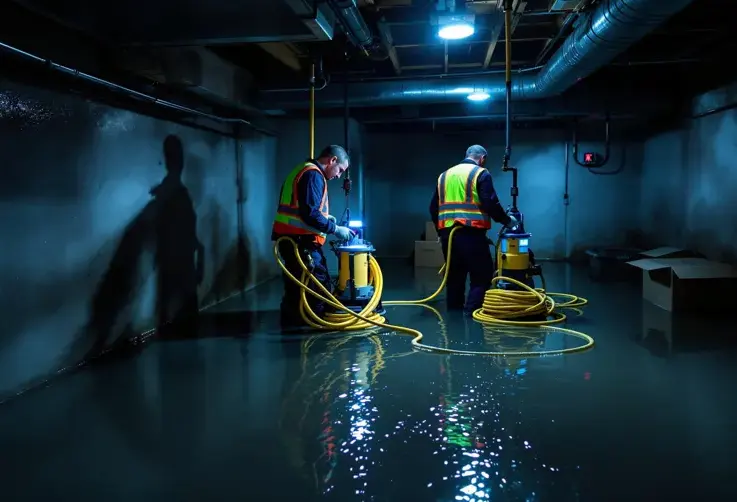
In November 2025 the Lynbrook Board of Trustees amended Chapter 252 of the village code to prohibit exterior basement and cellar entrances in dwelling districts A, B, and C. The change got attention because so many Lynbrook basements are lived in, not just used for storage.
Key takeaways
- Many Lynbrook basements are finished, rented or used as living space, so water there reaches carpet, drywall, furniture and stored belongings.
- Chapter 252 now prohibits exterior basement and cellar entrances in dwelling districts A, B, and C, which is a code rule and not a flood repair.
- Standing water should be removed quickly, because the longer it sits the further it moves into block, carpet padding and wall bottoms.
- Rain, a high water table and storm drains that cannot keep up are the usual causes, and Mill River is a known flood source in the village.
- A finished basement is dried to a reading, not by how it feels, and materials that cannot be cleaned are removed.
Why a Lynbrook basement is more than a storage room
Lynbrook is an older village. The median home was built in 1945, and 3,358 of its 7,507 housing units were built before 1940.
After World War II, the village let homeowners convert single family houses into two family homes with a side door and an upstairs apartment. Basements went through the same kind of change, and many are now finished rooms with carpet, drywall and electronics.
- Finished walls hide wet insulation and framing behind the paint.
- Carpet and padding hold water long after the surface looks dry.
- Boxes and furniture stored on the floor wick moisture upward.
What the Chapter 252 change says
The Board of Trustees amended Chapter 252 to prohibit exterior basement and cellar entrances in dwelling districts A, B, and C. That is the extent of what the village action covers.
It is a land use rule, and it does not tell a homeowner how to deal with water that is already in the room. A homeowner who is unsure how it applies to a house should ask the village Building Department.
- The rule is about exterior entrances to a basement or cellar.
- It applies to dwelling districts A, B, and C.
- Plumbing work in the village needs a permit, and plumbers must be registered with the village.
How water gets into a Lynbrook basement
Heavy rain pushes water through floor cracks, wall joints and window wells. In a low South Shore village the ground fills quickly, and storm drains can be overloaded when rain is heavy.
Rain and runoff
A September 2026 nor'easter put up to 3 inches of rain on Long Island, and it showed how fast saturated ground can push water indoors. Lynbrook runs a village stormwater program, and its code has a chapter on the storm sewer system.
Mill River
Mill River starts at Hempstead Lake State Park and runs through Lynbrook, East Rockaway, Oceanside and Bay Park. It flooded homes along its bank during Hurricane Sandy.
Living with the Bay is a $125 million state project aimed at reducing storm surge and rain flooding along the river.
Failed sump pumps
A pit pump that quits during the storm lets groundwater rise across the floor. Backup power is what keeps it running through an outage.
The first hours when the floor is wet
Safety comes before cleanup. Water and electricity are a bad mix, and a basement with standing water can hide live outlets and a running furnace.
Once the power question is settled, the goal is to get the water out and the contents up off the floor.
- Turn off power to the basement if the panel is dry and reachable, and stay out if water is near outlets.
- Lift furniture, boxes and electronics onto something dry.
- Photograph the high water mark, the damage and the belongings before moving them.
- Do not mix cleaning products or walk through water that may be contaminated.
- Call a restoration team to start extraction instead of waiting for the water to drain on its own.
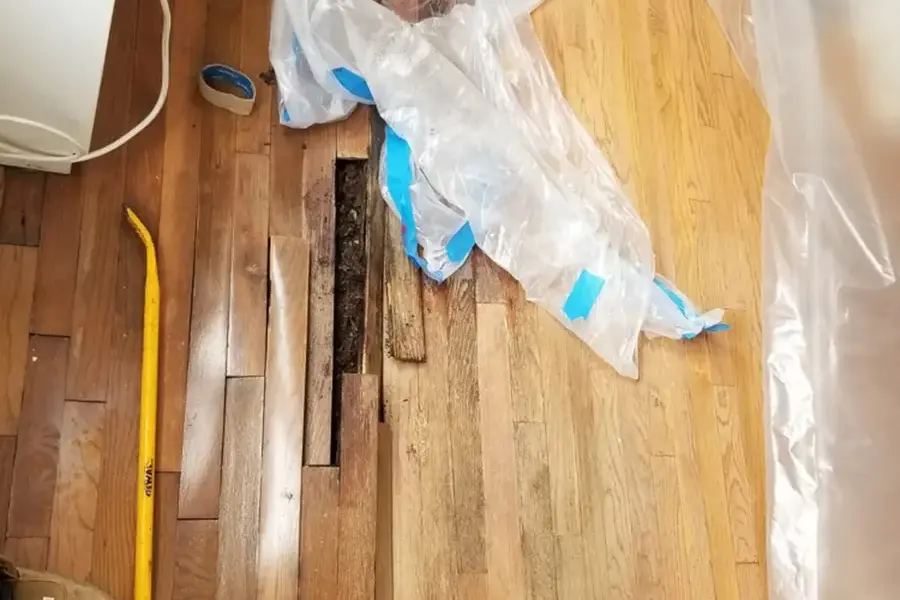
Extraction, removal and drying
A truck mounted unit or a portable pump takes the standing water out first. Extraction is the fastest way to limit how far water spreads into block, slab and wall bottoms.
Carpet padding is usually removed, and soaked drywall is cut above the high water mark. The team uses readings to decide what stays.
The page on basement flooding cleanup in Lynbrook explains the full process, and water extraction in Lynbrook covers the pump out step.
What gets removed
Materials that soaked up floodwater and cannot be cleaned come out. Rain and groundwater can carry soil and drain contaminants, so they are handled with care.
- Wet carpet padding and loose flooring.
- Drywall and insulation below the high water mark.
- Cardboard boxes and other porous stored items.
What gets dried
Block walls, the slab, framing and any trim that can be saved are dried with air movers and dehumidifiers. Readings are taken again until they reach the dry standard.
Owners, renters and basement apartments
Of 7,011 occupied homes in Lynbrook, 5,297 are owner occupied and 1,714 are rented. A flooded basement can therefore affect a tenant as well as the owner.
The village also has 1,703 two unit buildings, so a basement problem can reach more than one household.
- Tenants should tell the owner or property manager right away and keep their own photographs.
- Owners should list damaged belongings for both the building and any tenants.
- Insurance for the building and for a tenant's belongings are separate matters.
Documenting the loss for an insurer
A good record helps a claim move. Photographs of the high water mark, a list of what was affected and the drying readings all matter.
Coverage depends on the policy, and flooding from surface water is often treated differently from a plumbing failure. The insurer decides what is covered, and the homeowner should check the policy.
Neighboring Valley Stream has the same basement problem, and the village page on basement flooding cleanup in Valley Stream describes how the team works there. More about the village is on the Lynbrook hub page.
Questions
Does the basement entrance rule change how a flooded basement is cleaned?
No. Chapter 252 is a village code rule about exterior basement and cellar entrances. The cleanup follows the same extraction and drying steps either way.
How fast should standing water come out?
As soon as it is safe. Water that sits for a day or two soaks further into block, padding and wall bottoms, and the dry out takes longer.
Can finished basement walls be saved?
Often. Drywall that wicked water only a short way can be cut back above the high water mark, and the framing behind it can be dried.
Do I need a permit for basement plumbing repairs?
Lynbrook requires village permits for plumbing work, and plumbers who work in the village must be registered. Ask the Building Department before work starts.
Will the basement smell go away?
Yes, once the materials that held the water are removed and the rest is dried and cleaned. A lingering smell usually means something is still damp.
Who should I tell if the flooded basement is a rental?
The owner or property manager first, in writing if possible. Tenants should also keep their own photographs and a list of their belongings.