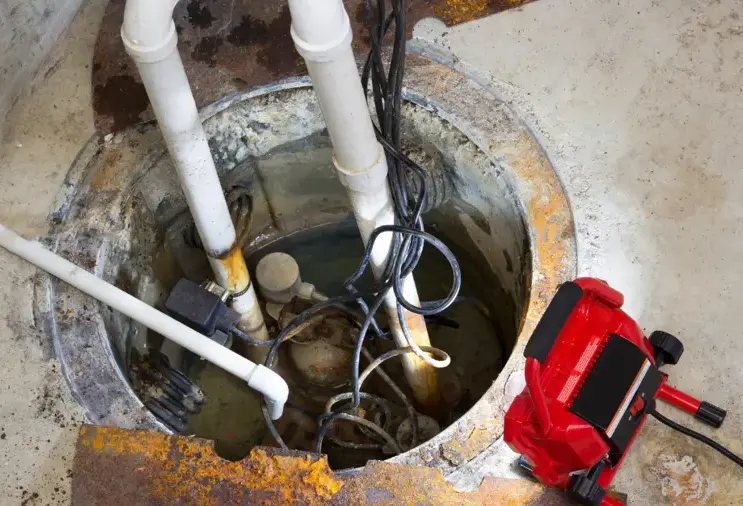
Malverne sits on a bed of sand and gravel left by Ice Age glaciers, according to the village's own history page. That ground drinks in rain quickly and sends groundwater up just as fast when a sump pump stops.
Key takeaways
- The village history says Malverne's water table is higher than in villages farther north on Long Island, and that some owners had flooded basements in rainy weather.
- A sump pump that fails during a storm lets groundwater spread across the basement floor within hours.
- Backup power matters because storms and power outages often arrive together.
- The Pine Stream Extension Project at Whelan Field was built to reduce flooding on nearby streets, but a basement pump is still the last safeguard inside the house.
- Water is extracted first, then wet materials are removed and the slab and walls are dried to a reading.
Why the ground under Malverne holds so much water
The village history describes a bed of sand and gravel. It also says the water table is higher than in villages farther north, and that many residents remember brooks and ponds that overflowed their banks.
Early home builders felt it too. During construction, many sites had to be pumped for days before a foundation could go in, and even after houses were built some owners had flooded basements in rainy weather.
- Sand and gravel let rainwater reach the foundation quickly.
- A high water table means less room for the ground to absorb more.
- The housing is older, with a median build year of 1941 and 1,535 of 3,164 units built before 1940.
What a sump pump does and why it stops
A sump pump sits in a pit at the lowest point of the basement. When groundwater fills the pit, a float switch starts the pump and sends the water outside.
That is a lot to ask of one machine, and the failure points are well known.
Power loss
The September 25 to 27, 2026 nor'easter led the governor to declare a state of emergency for Long Island. Storms like that can knock out power exactly when the ground is saturated and the pump is needed most.
Mechanical failure
Switches stick, impellers clog with silt and old pumps simply wear out. A pump that has not been tested in a while may be the one that fails.
Overwhelmed capacity
Even a healthy pump can fall behind when rain is heavy and the water table is already high. Water then rises faster than it leaves.
The first hours after the pump quits
Groundwater does not stop at the pit. It spreads across the floor, soaks carpet edges and climbs into the bottom of the walls.
The sooner the pump out starts, the less of the basement is affected.
- Keep clear of the water until the power to the basement is off.
- Lift furniture and stored boxes onto something dry.
- Photograph the pit, the water level and the damage.
- Do not run a wet vacuum in standing water unless it is rated for it.
- Call a restoration team for extraction rather than waiting for the rain to stop.
Streets near Pine Stream and Whelan Field
Pine Stream runs along the eastern edge of Malverne through Whelan Field and follows Ocean Avenue in the village. Nassau County owns the stream and is responsible for maintaining it.
Whelan Field was built on a former pond that was filled in, and before 2024 rainwater at the park drained straight into the stream and ponded on the baseball fields.
The Pine Stream Extension Project is a $6.3 million stormwater project funded by the New York State Governor's Office of Storm Recovery after Hurricane Sandy. It broke ground on June 10, 2024, and the park reopened in June 2025.
What the project built
Concrete basins and plastic tanks under the two baseball fields hold rain water and slow its release to the stream. A state environmental notice said the extension was meant to reduce flooding on nearby streets, naming Coral Court, Pinelake Drive and Ossipee Road.
What it does not do
Street drainage improvements do not replace a working pump in a basement. Groundwater under a house is a separate problem from water in the street.
Extraction, removal and drying
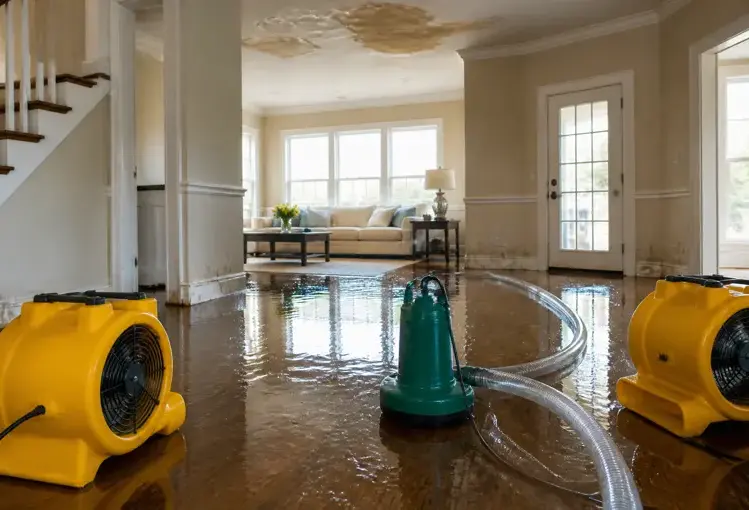
Water comes out first with a pump or a truck mounted unit. Wet carpet, padding and soaked drywall near the floor are removed if they cannot be cleaned.
Air movers and dehumidifiers then dry the slab, block and framing, and moisture readings show when the basement has reached the dry standard.
More detail is on the page for sump pump failure cleanup in Malverne, and the broader job is described under basement flooding cleanup in Malverne.
Backup options and pump upkeep
A battery backup pump runs from a stored battery when the power fails, and a generator can run the main pump. Which one suits a house depends on the pit, the basement and the budget.
Upkeep matters as much as the equipment. A pump that has never been tested may fail on the first big night.
- Pour water into the pit and watch the pump start and stop.
- Check that the discharge pipe is clear and points away from the foundation.
- Clear silt and debris from the pit.
- Replace a battery that is old or weak.
Preparing for the next storm
A pump that works only when the power is on is only half a plan. Backup power, a tested switch and a clear discharge path give the system a better chance.
Village plumbing work needs a Building Department permit, and the village's permit form lists sewer and ejector pump items. A homeowner replacing a pump or adding a new one should check with the village first.
Neighboring Valley Stream faces the same low ground, and its page on sump pump failure cleanup in Valley Stream covers the same steps. The Malverne hub page has more on the village.
Questions
Why does Malverne have so much basement water?
The village history says the ground is sand and gravel from the glaciers and that the water table is higher than in villages farther north. That means groundwater is close to the foundation.
Did the Pine Stream Extension Project solve basement flooding?
It was built to reduce flooding on nearby streets by holding rain water and slowing its release. It does not replace a working pump inside a house.
Should a sump pump have backup power?
It is a sensible precaution, because storms often cause outages while the ground is wet. A battery or generator keeps the pump running.
How long does a flooded basement take to dry?
It depends on how much water came in and what is wet. Drying continues until readings reach the dry standard, not for a fixed number of days.
Is basement flooding covered by insurance?
It depends on the policy and the cause. Groundwater and a pump failure are often treated differently, so the homeowner should ask the insurer.
How can I test my sump pump?
Pour water into the pit until the float rises and watch whether the pump starts, empties the pit and shuts off. If it does not, a plumber or pump specialist should look at it.