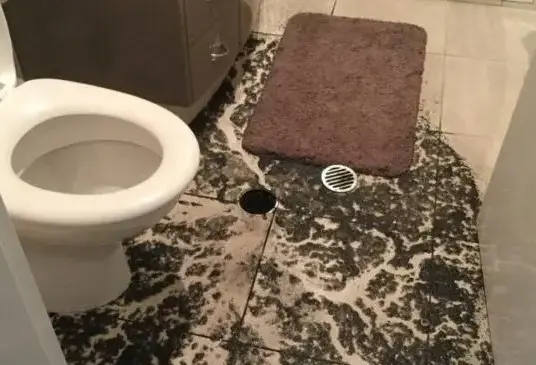
Rockville Centre runs its own village sewerage system, and its Public Works department includes a sewer division. That matters when a toilet or floor drain backs up, because there are two jobs: one outside the house for the village, and one inside for a trained cleanup crew.
Key takeaways
- A sewage backup is Category 3 water and should not be cleaned with a mop and bucket.
- The village has its own sewerage system and a Public Works sewer division, so a backup that may involve the public side is worth reporting to the village.
- Cleanup inside the house is separate and is handled by trained crews with protective gear.
- Stop using water in the house, keep people out of the area and photograph the damage first.
- Porous materials that touched sewage are removed, and the rest is cleaned, treated and dried to a reading.
What the village runs and what it does not
Rockville Centre's village code includes a chapter on its own sewerage system. Village Public Works includes a sewer division.
The village also runs its own Water Department, so drinking water is supplied by the village and not by a regional utility.
- The village sewerage system is the public side.
- The house plumbing and the pipe that connects to it are a separate question, and who owns what is not covered here.
- A plumber can tell whether a blockage sits in the house or in the pipe outside.
Why a sewer backup is not an ordinary leak
Sewage carries bacteria, viruses and other contaminants. Under the industry standard it is Category 3, the most serious category of water damage.
Contact is a health risk, and the damage does not stop with the visible stain.
- Do not wade through the water or let children and pets near it.
- Do not use bleach as a substitute for removal and drying.
- Do not run a household vacuum or fans through the contaminated area.
What to do in the first hour
Stop adding water to the system. The more the house runs water, the more the backup spreads.
Then make a record before anything is moved.
Inside the house
Stop using toilets, sinks, showers and the washing machine. If the water is near outlets, leave the power off and stay out.
- Photograph the water, the drain and the damage.
- Lift valuables and papers out of the wet area.
- Open nothing that spreads the water to clean rooms.
Outside the house
If neighbors have the same problem, or the backup seems to come from the street, tell the village. A report to Public Works lets the village check its side of the system.
What the cleanup crew does
A trained crew wears protective gear and begins by containing the area so the contamination does not spread to clean rooms.
The water is pumped out, and materials that cannot be cleaned are removed and bagged.
- Carpet, padding and soft drywall that touched sewage are removed.
- Hard surfaces, framing and slab are cleaned and treated with an antimicrobial.
- Air scrubbers and drying equipment finish the job, and readings confirm the dry standard.
Questions to ask during a backup
A backup is stressful, and a few direct questions keep the response organized.
- Is the problem only in this house, or are neighbors affected?
- Has the village been told about a possible public side problem?
- Has a plumber checked the pipe with a camera or snake?
- What will be removed, and how will drying be measured?
Keeping the backup from coming back
A plumber can inspect the drain with a camera and find roots, cracks or a collapsed section. Fixing the cause matters, because cleaning up a repeat backup is expensive and unpleasant.
Some homeowners also ask about a backflow valve, which is a plumbing decision to make with a plumber and with village permits in mind.
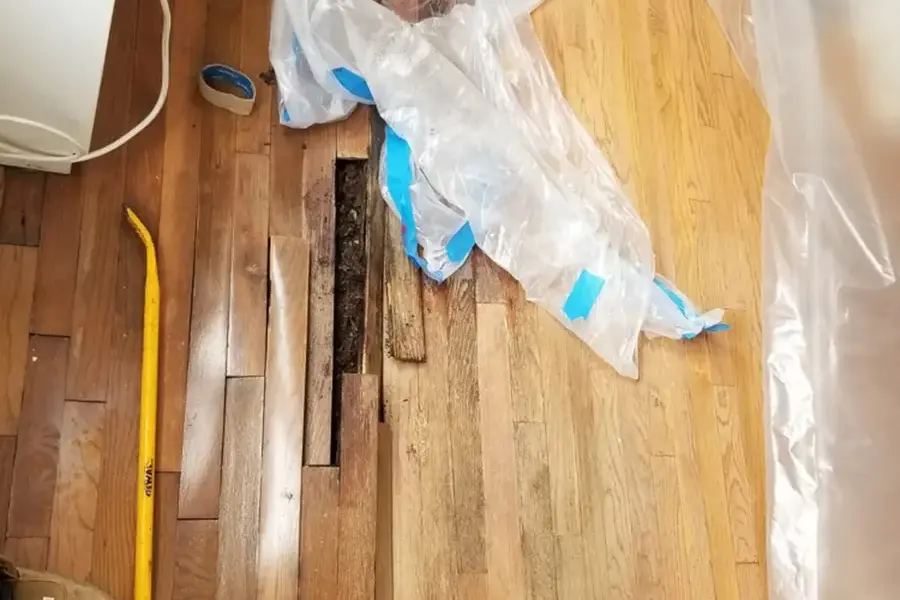
Where backups tend to hit in older homes
Rockville Centre's median home was built in 1945, and 4,498 of its 10,332 housing units were built before 1940. Older drain pipes and old connections are more likely to clog, crack or back up.
Basements and low floors are the first places sewage shows up, because gravity sends it to the lowest drain.
Rain, rivers and the sewer system
Mill River runs through the village, and the county's hazard mitigation annex lists flood prone areas as residential streets along it. Heavy rain at high tide can stress drains and bring water into basements.
On December 23, 2022 overnight rain and a high tide around 8 a.m. flooded the Mill River shoreline, and the Herald reported no damage to adjacent properties. On August 3, 2026 a lane of Sunrise Highway was blocked by flooding during heavy rain.
Whether a given backup is tied to a storm or to a house problem is a question for the plumber and the village.
Apartment buildings and shared drains
Rockville Centre has 1,608 units in buildings of 50 or more and 886 units in buildings of 20 to 49. Of 9,913 occupied homes, 2,469 are rented.
In a larger building, one clogged drain stack can send sewage into several units at once. The building owner or manager should be told right away.
- Tenants should keep their own photographs and a list of damaged belongings.
- Neighbors on the same stack may see water at floor drains or tubs.
- Cleanup in each unit is handled separately from the repair of the shared pipe.
Documenting the loss and finding help
A thorough record helps with a claim. Photographs, a list of discarded items and the drying readings all matter.
Coverage for a sewer backup depends on the policy, and some policies need an added endorsement. The insurer decides what is covered, and the homeowner should check the policy.
The page on sewage backup cleanup in Rockville Centre describes the process, and water extraction in Rockville Centre covers removing the standing water. More about the village is on the Rockville Centre hub page, and neighboring residents can read about sewage backup cleanup in Valley Stream.
Questions
Should I report a sewer backup to the village?
It is worth doing, especially if neighbors are affected or the backup seems to come from the street. Rockville Centre runs its own sewerage system, and Public Works has a sewer division.
Can I clean up a small sewage backup myself?
It is not recommended. Sewage is Category 3 water with a real health risk, and materials that soaked it up usually have to be removed.
Why can't I just use bleach?
Bleach does not remove contaminated materials or dry the structure. Carpet, padding and soft drywall that touched sewage generally have to come out.
How long does cleanup take?
It depends on how much water came in and what it touched. Drying runs until the readings reach the dry standard.
Does homeowners insurance cover a sewer backup?
It depends on the policy, and some policies treat backups separately. The insurer decides what is covered.
What if I live in an apartment building?
Tell the owner or manager right away, photograph the damage in your unit and keep a list of what was affected.