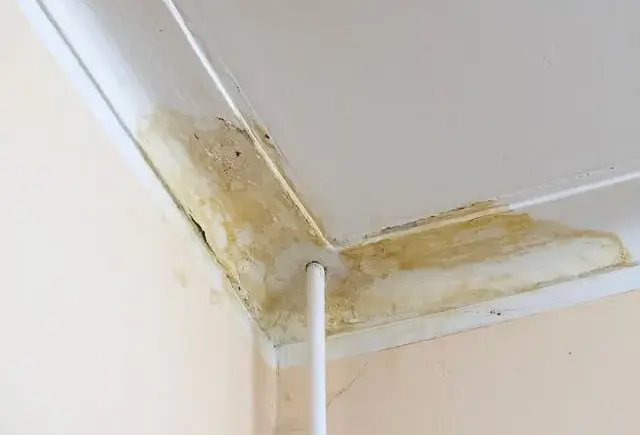
Nor'easters arrive from fall through spring on the South Shore, and wind driven rain finds every weak point in an older roof. The most recent one ran from September 25 to 27, 2026, and it is a good reminder of what to do when a ceiling starts to stain.
Key takeaways
- A roof leak often shows up far from the hole, as a ceiling stain, a wet wall or damp attic insulation.
- The September 2026 nor'easter led to a state of emergency on Long Island, with up to 3 inches of rain reported.
- Temporary protection stops more water from coming in, and wet insulation and drywall are removed before they sag.
- Photograph the stain, the attic and the roof damage before anything is moved or repaired.
- A leak that is dried to a reading keeps a small problem from becoming a ceiling collapse.
Why older Valley Stream roofs leak in a nor'easter
Much of the village was built between the 1920s and the 1950s, and the roofs on those colonials, capes, Tudors and ranches have seen decades of weather. Flashing around chimneys and vents, worn shingles and lifted edges are the usual weak spots.
Nor'easters drive rain sideways. Water that would run off in a normal storm is pushed under shingles and into the roof deck.
- Rain blown under shingles and flashing.
- Lifted or missing roof edges after strong wind.
- Limbs and debris that dent or tear roofing.
- Clogged gutters that let water back up under the edge.
What the September 2026 storm showed
A multi day nor'easter struck Long Island from Friday, September 25 through Sunday. The governor declared a state of emergency, and up to 3 inches of rain was reported across Long Island.
In neighboring Lynbrook, a large branch fell on Marshall Avenue during the storm. It is a small example of how wind alone can damage roofs and trees across the area.
How a roof leak shows up inside
Water follows rafters, wires and pipes before it drips. The spot where it shows up on a ceiling can be some distance from the real opening.
Ceiling and wall stains
A brown ring, a sagging patch or bubbling paint on an upper floor ceiling usually means water above it. A stain along an exterior wall can mean water has run down inside the wall.
Attic signs
Damp insulation, dark wood and drips on the attic floor all point to an active leak. Wet insulation loses its value as insulation and holds water against the ceiling below.
What to do on the first day
The aim is to keep more water out and to limit damage inside. Safety comes first, because a wet ceiling can fall and wet insulation can sit above live wiring.
Stay off the roof in wet or windy weather. A roofer or a restoration team can place temporary protection safely.
- Move furniture and valuables away from the stain.
- Place a bucket under a drip and poke a small hole in a bulging ceiling only if a trained person says it is safe.
- Photograph the stain, the attic and any visible roof damage.
- Turn off power to a room with a wet ceiling light fixture.
- Call for temporary roof protection and a moisture assessment.
A sagging ceiling
Water collects above a ceiling and adds weight. A bulging or sagging ceiling can drop without warning.
Keep people and pets out of the room, and do not stand under the bulge. A trained person can release the water in a controlled way and open the ceiling safely.
- Do not turn on a light under a wet ceiling.
- Move furniture out from under the stain.
- Place a plastic sheet or bucket to catch drips from a controlled opening.
- Mark the edge of the stain with a pencil so growth is easy to see.
Protecting the roof and drying the house
Temporary protection, often a tarp or board over the damaged area, keeps rain out until a permanent repair can be made.
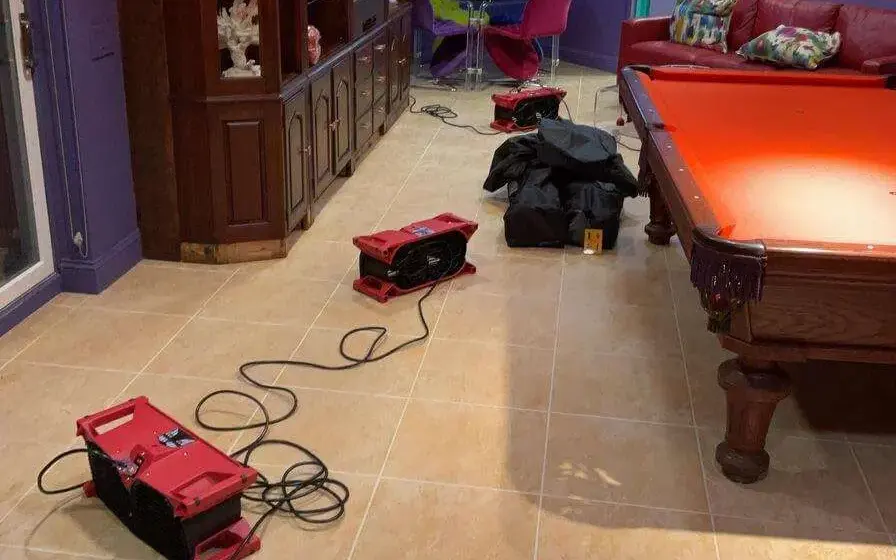
Inside, wet attic insulation is removed, because it cannot be dried reliably. Drywall or plaster that is soaked or sagging is cut back, and the joist bays are dried with air movers and dehumidifiers.
The page on roof leak water damage in Valley Stream describes how the team handles the attic and the wet ceiling, and the ceiling leak page for Valley Stream covers the rooms below.
Why readings matter
A ceiling that looks dry can still be wet above the paint. A moisture meter checks the plaster, the framing and the insulation, and drying continues until they reach the dry standard.
Who does the repair
A roofer repairs or replaces the roofing. The restoration team dries the house, and the two jobs are best done in the right order so the rebuild does not close up a wet cavity.
Common mistakes
Most mistakes come from rushing or from waiting. Both leave a wet cavity behind.
- Painting over a stain before the ceiling is dry.
- Leaving wet insulation in the attic because the dripping stopped.
- Climbing onto a wet roof in the wind.
- Calling a roofer but not checking the rooms below for wet plaster.
- Skipping photographs because the damage seems small.
Before the next storm
Nor'easters come back each year from fall through spring. A short checklist in the dry weeks makes the next one easier.
- Clear the gutters and downspouts.
- Look at the flashing around chimneys and vents.
- Check the attic for damp insulation or dark wood after any storm.
- Keep the roofer's number and the restoration team's number in one place.
Documenting the loss for the insurer
Storm damage claims go more smoothly with a clear record. Photographs from the first day, a note of when the leak started and the drying readings all help.
Coverage depends on the policy and the cause, and the insurer decides what is covered.
Lynbrook homeowners can read the same steps under roof leak water damage in Lynbrook, and the Lynbrook hub page has more on the neighboring village.
Questions
Why is the stain not under the damaged part of the roof?
Water runs along rafters, wires and pipes before it drips. The stain can show up some distance from the opening.
Can I wait for the ceiling to dry on its own?
It is risky. Wet insulation and plaster stay wet for a long time, and a sagging ceiling can fall.
Should I climb up to tarp the roof myself?
No. A wet roof in wind is dangerous. A roofer or restoration team can place temporary protection safely.
Do I need to replace wet attic insulation?
Usually, yes. Wet insulation cannot be dried reliably and it holds water against the ceiling below.
What should I photograph for a claim?
Photograph the ceiling stain, the attic, any roof damage and the date, then keep notes on when the leak started.
How often do nor'easters bring roof leaks?
Nor'easters arrive from fall through spring, and wind driven rain can find weak spots in older roofs each time.