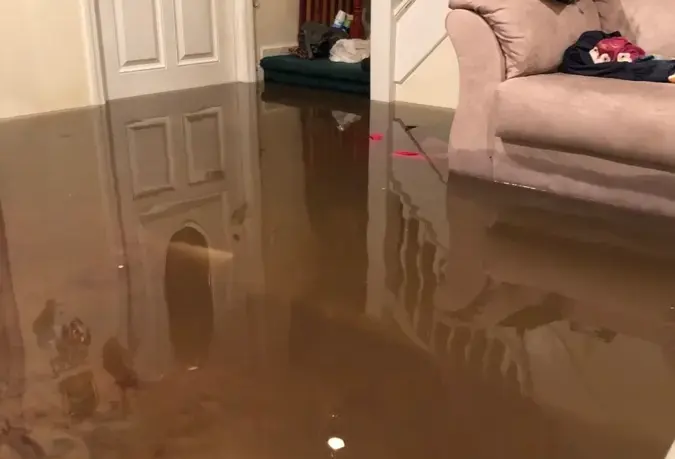
Summer thunderstorms and tropical remnants can drop rain faster than the low South Shore outwash plain can absorb it, and basements across Valley Stream take the water. The first day decides whether a flooded basement is a short dry out or a long rebuild.
Key takeaways
- Flash floods in Valley Stream come from summer thunderstorms and tropical remnants, and hurricane season runs from August to October.
- The remnants of Ida in September 2021 flooded basements across Queens and Nassau, and Hurricane Sandy in October 2012 pushed storm surge into the South Shore bays just south of the village.
- Power safety comes first, then extraction, then a record of the damage.
- Storm and flood water is contaminated, so materials that soaked it up are usually removed.
- Drying continues until readings reach the dry standard, which is more reliable than judging by feel.
Why Valley Stream basements take water so quickly
The village sits on a low South Shore outwash plain with a high water table, so heavy rain has little room to soak away. Much of the housing was built between the 1920s and the 1950s, and many homes have finished basements.
Hook Creek runs along the Queens border, and Hendrickson Lake sits in Hendrickson Park. Valley Stream State Park adds more open water and low ground to the area.
- Rain arrives in short, intense bursts during summer thunderstorms.
- Tropical remnants bring longer, heavier rain from August to October.
- A high water table leaves little room for groundwater to drain.
Storms the area remembers
Hurricane Sandy in October 2012 sent storm surge up the South Shore bays just south of the village. The remnants of Ida in September 2021 caused flash flooding that filled basements across Queens and Nassau.
Neither storm is a forecast. They are reminders that a single wet night can reach a finished basement in a house that has never flooded before.
The first hour
The first hour is about safety and stopping the spread. Water in a basement can reach outlets, a furnace and a water heater.
A few quick steps protect people and belongings.
- Do not enter a basement with standing water if the power is on or you are unsure.
- Shut off power at the panel only if the panel is dry and reachable without wading.
- Keep children and pets out of the water.
- Move what can be moved to a dry floor above.
- Photograph the water level before you touch anything.
What not to do
Well meant shortcuts can make a flooded basement worse.
- Do not walk through standing water while the power is on.
- Do not use a household vacuum on water.
- Do not turn on the furnace if it sat in water.
- Do not seal a damp wall with paint or panels.
- Do not wait for the water to drain on its own.
The next few hours
Once the room is safe, the priority is to get the water out. The longer it sits, the further it soaks into carpet padding, block and the bottoms of walls.
Extraction
A pump or truck mounted unit removes standing water. Then a smaller extractor pulls water from carpet and flooring.
Sorting what stays
Storm and flood water can carry soil, runoff and drain contaminants, so it is treated as contaminated. Porous items that soaked it up usually cannot be cleaned.
Hard surfaces and framing that can be cleaned are cleaned, then dried.
- Wet carpet padding and soaked drywall near the floor are removed.
- Cardboard boxes and loose stored items are discarded.
- Furniture, books and keepsakes are sorted for cleaning or removal.
Contents: what to save and what to discard
Belongings in a flooded basement are sorted into three piles. Some can be cleaned, some can be dried and some must go.
Porous items that soaked up contaminated water are the hardest to save, and photographs of them help the claim.
- Hard items such as metal tools and plastic bins can usually be cleaned.
- Photographs, documents and books can sometimes be dried by a specialist.
- Upholstered furniture, mattresses and cardboard that touched the water are usually discarded.
- Anything electrical should be checked before it is used.
By the end of day one
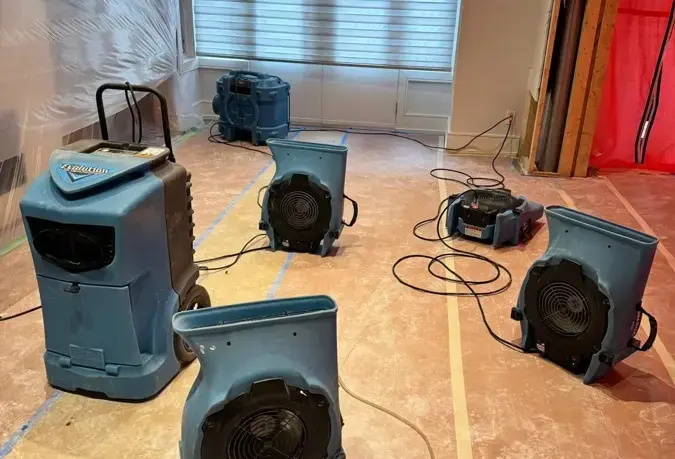
A good first day ends with the water out, the damaged material removed and drying equipment running. Air movers and dehumidifiers pull the moisture out of the slab, block and framing.
Moisture readings are taken, and the same spots are checked again over the next days.
The page on storm flood cleanup in Valley Stream lays out the whole process, and water extraction in Valley Stream covers the pump out step.
Why the pump matters
A sump pump keeps groundwater out of many basements. It can fail when a storm cuts power or when rain is too heavy for it.
If a pump quit, the story is covered in the page on sump pump failure cleanup in Valley Stream. A battery or generator backup helps keep it running through an outage.
Documenting the loss and next steps
A claim moves faster with a clear record. Keep photographs from the first hour, a list of discarded items and the drying readings.
Coverage for a flash flood depends on the policy and on how the water entered, and the insurer decides what is covered. Flood damage and a pump failure are often treated differently, so ask before assuming.
More detail on the whole job is on the page for basement flooding cleanup in Valley Stream.
Photographs and lists
Photographs show what the basement looked like at the start. A written list of damaged items, with notes on what each one is, backs it up.
Keep receipts for emergency costs, and keep every discarded item's photograph until the claim is settled.
Questions
How soon should water come out of a flooded basement?
As soon as it is safe. Water that sits for a day or more soaks into padding, block and wall bottoms, and the dry out gets longer.
Is flash flood water contaminated?
Yes. It carries runoff and can mix with drain water, so porous materials that soaked it up are usually removed.
Can a basement that flooded be saved?
Often, yes. Standing water is removed, ruined materials are taken out and the slab, block and framing are dried to a reading.
What should I photograph first?
Photograph the water level, the damaged floor and walls and your belongings before they are moved. These pictures support an insurance claim.
When is hurricane season in this area?
Hurricane season on the South Shore runs from August to October, and nor'easters follow from fall through spring.
What should I never do in a flooded basement?
Never enter standing water while the power is on, and never use a household vacuum on water. Wait for the power to be shut off safely.