Storm and Nor'easter Flood Cleanup in Malverne, NY
The village fire department answered 172 alarms during Hurricane Sandy week in 2012, and a September 2026 nor'easter brought a state of emergency to Long Island. After storm water gets in, the flood crew treats it as contaminated and dries every room.
(888) 527-9860Get storm water out of Malverne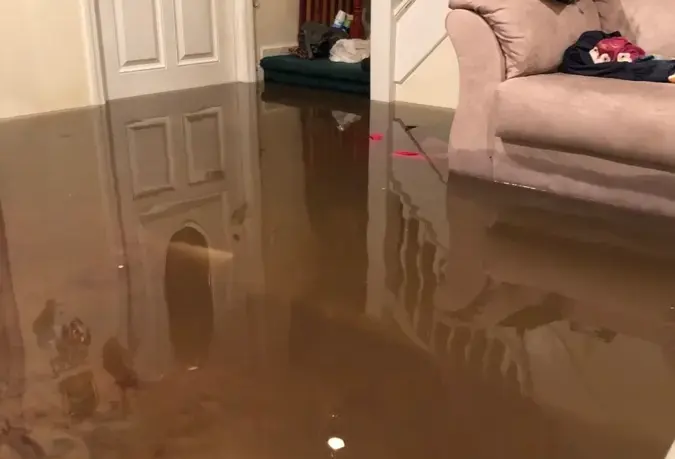 Malverne, NY
How storm and nor'easter flood cleanup is handled in Malverne
The tech who does the walkthrough maps moisture before any equipment goes down, so the drying plan matches what is actually wet. Equipment stays until the readings say dry, not until it looks dry.
- 1
Pump the deep water
Submersible pumps lower the water so extraction wands can reach the floor.
- 2
Remove the ruined
Soaked carpet, pad and drywall are cut out and bagged.
- 3
Clean and treat
Remaining surfaces are washed and treated with antimicrobial.
- 4
Dry to readings
Machines run until moisture readings meet the dry sample.
Storm water crosses yards, streets and drains before it reaches a house, so it carries whatever it picked up on the way. That is why a flood from outside is handled differently from a leak inside.
What does storm and nor'easter flood cleanup cost in Malverne, NY?
Storm flood cleanup for Malverne homes ranges from $3,000 to $28,000. Flood depth, the rooms and levels touched, the porous material that has to come out and the speed of the first response decide where a job falls.
Garage or bare basement
- Pump-out first
- Surfaces treated
- Slab dried
Finished basement
- Flood cuts and removal
- Plastic containment
- Desiccant drying
Main floor and basement
- Full Category 3 removal
- HEPA scrubbing
- Contents itemized
Ranges are typical, not a quote: category of water, square footage, material class and how fast drying started move the number most. Run the water damage cost calculator for a closer range.
Why a storm can reach a Malverne house
Pine Stream runs along the eastern edge of the village and follows Ocean Avenue, and the village history recalls brooks and ponds that overflowed their banks. The $6.3 million Pine Stream Extension Project at Whelan Field was funded by state storm recovery money after Hurricane Sandy.
- Heavy rain that saturates ground and pushes groundwater up through the slab.
- Runoff that backs through floor drains, a Category 3 problem; see sewage backup cleanup.
- Wind-driven rain that slips past a weak roof or old window; see roof leak water damage.
- Power failures that stop a sump pump during the storm itself.
How the flood crew responds
Pumps remove the deep water first, then truck-mounted units clear what remains on floors. Carpet, pad, insulation and the lower band of drywall that storm water touched are removed, and surfaces are cleaned and treated before any drying begins.
- Containment and HEPA scrubbers keep contaminated dust out of clean rooms.
- Desiccant and LGR machines dry masonry, framing and subfloor.
- Every removed item is photographed and listed for the claim.
When the rain stops
In June 2015 the National Weather Service issued a flash flood watch for Malverne with rain rates of 2 to 3 inches per hour possible, a reminder of how fast a basement can fill. For a below-grade flood, see basement flooding cleanup.
Storm and nor'easter flood cleanup across Malverne and nearby villages
Flood crews serve all of ZIP 11565 in Malverne, with attention to blocks along Ocean Avenue and Pine Stream, Malverne Park, Norwood and the streets near Hempstead Avenue and Franklin Avenue.
The same service nearby: storm and nor'easter flood cleanup in Valley Stream, Lynbrook, Rockville Centre.
Related water damage services in Malverne
Storm and Nor'easter Flood Cleanup questions in Malverne, NY
Why is storm water treated as Category 3?
It runs across ground, drains and gutters before entering, so it carries bacteria and debris. Porous materials it soaked cannot be made safe by drying.
Can the Whelan Field work stop a basement flood?
The tanks and basins slow rain release to Pine Stream and were meant to cut flooding on nearby streets, but a house can still take water from its own foundation.
How long after a storm should work begin?
As soon as it is safe to enter. Mold can begin within 24 to 48 hours in wet materials, so waiting lets damage grow.
What gets thrown out?
Carpet, pad, insulation and drywall that floodwater soaked, plus upholstered furniture and anything porous that cannot be cleaned.
Is flood damage covered?
A standard homeowners policy often excludes surface flooding, which usually needs a flood policy. Your own insurer can say what yours includes.
Do repairs need permits?
Plumbing work and basement conversion need Building Department permits in the village. Drying itself is not plumbing work.
Storm water in a Malverne house? Start the cleanup.
Crews extract the floodwater, remove what it ruined and dry the house to readings.
(888) 527-9860Malverne storm flood help