Structural Drying and Dehumidification in Malverne, NY
A median build year of 1941 means plaster, old framing and hardwood in much of Malverne. Those materials can feel dry while still holding water, so the drying team reads them every day until the numbers agree.
(888) 527-9860Schedule the Malverne dry-down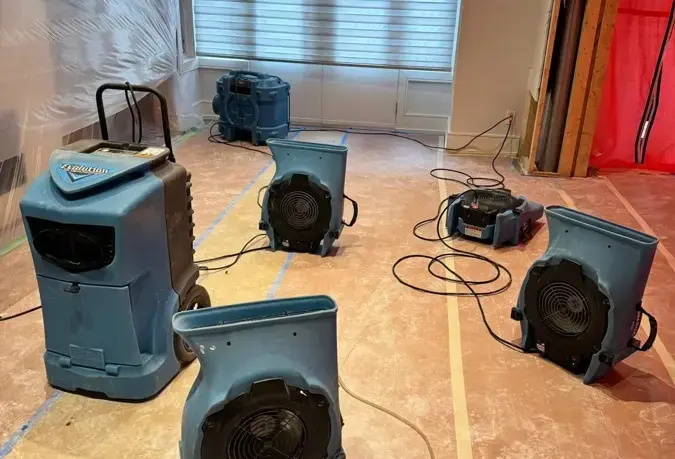 Malverne, NY
How structural drying and dehumidification is handled in Malverne
The tech who does the walkthrough maps moisture before any equipment goes down, so the drying plan matches what is actually wet. Equipment stays until the readings say dry, not until it looks dry.
- 1
Classify the loss
The team notes how much moisture each material holds and picks equipment to match.
- 2
Place the machines
Air movers, LGR units and desiccants go in according to room size and material.
- 3
Read daily
Each material is measured and the log is updated.
- 4
Release the equipment
Machines leave once readings match the dry sample.
A wall that feels dry to the hand may still hold water in its plaster, studs and subfloor. Unless that water is drawn out, it lingers for weeks and starts new problems, from swollen trim to musty rooms.
What does structural drying and dehumidification cost in Malverne, NY?
Drying a Malverne structure properly tends to cost $1,000 to $9,000. The loss class, room count, materials and the equipment days that daily readings call for decide the total.
Small area
- Fans and an LGR unit
- Readings each day
- A few days
Whole floor or basement
- More machines
- Wall cavities dried
- Logged conditions
Plaster, hardwood and block
- Desiccant machines
- Hardwood drying mats
- Longer run
Ranges are typical, not a quote: category of water, square footage, material class and how fast drying started move the number most. Run the water damage cost calculator for a closer range.
Slow-drying materials in Malverne
Of Malverne's 3,164 housing units, 1,535 were built before 1940. Plaster on lath, plank subfloors and solid hardwood absorb water deeply and give it up slowly, and the high water table adds to the moisture in basement walls and slabs.
- Plaster and lath that stay damp long after the surface feels dry.
- Hardwood that cups when dried too fast.
- Block and concrete that hold water for days.
- Wall cavities with no airflow.
Equipment, placement and monitoring
The team calculates equipment from the class of loss and the room size. Air movers circulate air across wet surfaces, LGR dehumidifiers pull moisture from the air and desiccant units take on plaster and masonry.
- Pinless and pin meters take daily readings on each material.
- Thermal imaging checks cavities that cannot be seen.
- Equipment is moved as the wet area shrinks.
Knowing the job is finished
Machines leave when materials sit within 2 to 4 points of a dry reference, and not a day earlier, even if the room feels fine. The readings go in the claim file, and water extraction covers the step that comes before drying.
Structural drying and dehumidification across Malverne and nearby villages
Drying crews work throughout Malverne, ZIP 11565, including Malverne Park, Norwood and the older houses beside Hempstead Avenue, Church Street, Ocean Avenue, Franklin Avenue and Whelan Field.
The same service nearby: structural drying and dehumidification in Valley Stream, Lynbrook, Rockville Centre.
Related water damage services in Malverne
Structural Drying and Dehumidification questions in Malverne, NY
What does structural drying mean?
It means drying the framing, subfloor, plaster and masonry that make up the building, and not only the carpet or the surface of a wall.
Why do plaster walls take longer?
Plaster and lath absorb water deeply and release it slowly. Desiccant dehumidifiers and extra days are common.
How can I tell when drying is finished?
Readings on each material fall within 2 to 4 points of a dry reference. A floor that feels dry to the hand is not enough.
Will drying warp my hardwood?
Dried slowly and monitored, hardwood can often be saved. Boards that cupped badly may need replacing.
Is the noise normal?
Yes. Air movers and dehumidifiers run all day, and the noise ends when readings meet the goal.
Does insurance cover drying?
Drying after a sudden covered loss is usually part of the claim. Your own insurer can explain how your policy treats it, and basement flooding cleanup shows a typical case.
Still damp in Malverne? Dry it to readings.
Equipment is sized to the class of loss, and readings are logged until the dry goal is hit.
(888) 527-9860Malverne structural drying help